Chess Duels Bullet vs Blitz vs Rapid
Choose the right Chess Duels time control for learning, climbing, and staying tilt-free.
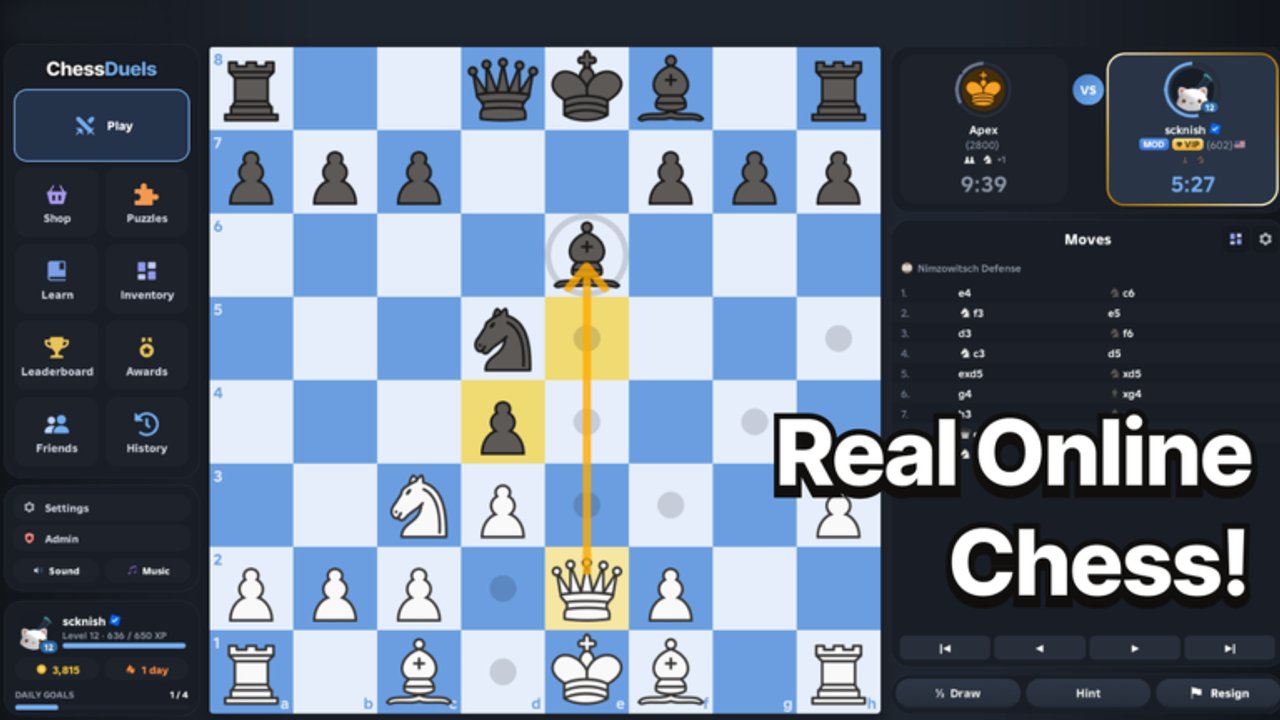
Chess Duels splits rated play into Bullet, Blitz, and Rapid. Each mode uses the same rules of chess, but the clock changes how you calculate, how often you blunder, and how your rating moves. Treat them as three different sports that share a board. This guide explains when to pick each control, the habits that win on the clock, common mistakes that dump rating, and why your Rapid number can look nothing like your Bullet number. Pair it with Getting Started, Climb Rating, and the Tier List Hub once you know which queue you live in.
What each time control feels like
Bullet is pure decision speed. You have seconds, not minutes, so pattern recognition beats deep calculation. Pre-moves, mouse (or touch) accuracy, and knowing your opening traps matter more than finding a quiet positional squeeze. Games end fast, queues refill fast, and one mouse slip can decide the result before the idea was even wrong.
Blitz sits in the middle. You still play with urgency, but you get short windows to calculate forcing lines, check for hanging pieces, and spot one-move mates. Most players climb here because the games feel chess-like without the long waits of Rapid. Blitz rewards clean tactics and practical endgames more than encyclopedic opening memory.
Rapid rewards thinking. You have time to build a plan, compare candidate moves, and review the board before you commit. Rapid is the best training partner for players who want their over-the-board habits to improve, not only their click speed. Rating swings feel slower, but each game teaches more if you use the review tool afterward.
Exact clock strings can change with patches, so always confirm the live labels in the Chess Duels matchmaking UI. The advice below stays useful even if a timer is tweaked by a few seconds.
When to pick Bullet
Choose Bullet when you already know your openings cold and want volume. It is ideal for:
- Warming up pattern recognition after a long break
- Practicing pre-move discipline on safe recaptures
- Grinding cosmetics coins through many short games
- Testing whether a sharp opening holds under panic
Skip Bullet as your main climb if you still hang pieces in quiet positions. The mode amplifies every mouse error and every skipped check for checks. New players who queue Bullet first often conclude they are “bad at chess” when they are mainly bad at the clock. Build a base in Rapid or Blitz first, then add Bullet sessions once your tactics from Puzzles and Lessons feel automatic.
When to pick Blitz
Blitz is the default climb mode for most Chess Duels players. Pick it when you want a mix of calculation and practical speed. Good Blitz habits include:
- Spending your time on forcing moves, checks, captures, and threats
- Moving faster in familiar opening structures so you keep reserve time for the middlegame
- Simplifying into winning endgames instead of hunting flashy mates when low on clock
- Flagging only when the position is truly drawn or lost; otherwise play for the board first
Blitz also sits well next to daily goals and streaks. You can play enough games to keep a streak alive without burning an entire evening on a handful of Rapid battles. If your Blitz rating stalls, do not instantly switch to Bullet for “easier” points. Fix the leak with puzzles and post-game review, then return.
When to pick Rapid
Rapid is the classroom. Use it when you are learning a new opening, repairing a recurring blunder type, or preparing for a serious climb session. In Rapid you should:
- Write a one-sentence plan after the opening (“attack the king,” “trade into a good endgame,” “fix the center”)
- Check every check and capture before you move, even if it feels slow
- Spend extra time on the first move that takes the game out of book
- Save enough clock for the endgame; many Rapid losses happen after a strong middlegame because players speed-run the finish
Rapid rating is usually the most honest measure of chess strength on Chess Duels. If you only care about leaderboard prestige in one number, invest here. If you care about coins and volume, mix Rapid study days with Blitz grind days.
Habits that transfer across all modes
Some skills help everywhere:
- Pre-move only safe replies. Recaptures with one legal capture are fine. Pre-moving speculative checks in Bullet is how you donate games.
- Scan checks, captures, threats every move. Say the words in your head until it is automatic.
- Know two openings as White and two defenses as Black. Depth beats a huge shallow repertoire when the clock is ticking. See the Tier List Hub for practical picks by mode.
- Stop after two losses in a row. Switch to puzzles or walk away. Tilt destroys Bullet and Blitz first, then follows you into Rapid.
- Review one critical position per loss. Chess Duels includes a review tool for a reason. Use it; do not queue revenge matches blind.
Common mistakes by mode
Bullet mistakes: over-pre-moving, ignoring the opponent’s last check, playing hope chess for a swindle when a simple trade wins on time, and mouse-slipping pieces to the wrong square. Fix input accuracy before you add sharper openings.
Blitz mistakes: burning three minutes on move eight, then blitzing a lost endgame; chasing traps instead of developing; refusing draws that are good for rating when you are low on time and pieces.
Rapid mistakes: treating the game like correspondence and getting into time pressure anyway; changing plans every three moves; refusing to trade queens when the endgame is clearly better.
Across all three, the biggest rating leak is playing while tilted. Chess Duels makes rematching easy. That convenience is a trap. Close the rematch button after a rough loss, open puzzles, or read Climb Rating for a reset routine.
How rating differs by mode
Your Bullet, Blitz, and Rapid ratings are separate skill estimates. A 1200 Rapid player can sit at 900 Bullet because of mouse speed, or sit at 1400 Bullet because they thrive on chaos. Climbing one ladder does not auto-boost the others. That is normal.
Practical implications:
- Judge progress inside one mode at a time. Do not average the three numbers into a story about your identity.
- If you want the global leaderboard flex, pick the mode where your peak is highest and specialize for a patch cycle.
- When learning, prefer the mode where you still have time to think. Transfer those ideas into faster queues later.
- Cosmetics and coins do not change rating. Boards and piece sets are visual only; see Cosmetics.
Matchmaking pairs you with similar ratings in that mode. Smurfing or hopping modes to farm weaker players teaches bad habits and wastes the puzzle and lesson content built into Chess Duels.
A simple weekly schedule
- Two Rapid games with full review after each loss
- A Blitz block of short sessions with a hard stop after two consecutive losses
- One Bullet warm-up only if your hands feel sharp
- Daily puzzles and a lesson before rated play so tactics arrive before the clock starts
New accounts should start from Getting Started, claim any codes, then spend their first evenings in Rapid or calm Blitz. Add Bullet after your hanging-piece rate drops. When you are ready to push a number hard, open Climb Rating and treat time-control choice as part of the plan, not an afterthought.
Master the clock and the board gets louder. Pick the mode that matches today’s goal—learn, climb, or warm up—and let Chess Duels’ rated queues do the rest.
Frequently Asked Questions
Quick answers to common Chess Duels questions.
Which Chess Duels time control should beginners play first?
Start with Rapid or calm Blitz so you have time to check hanging pieces. Add Bullet only after basic tactics feel automatic.
Why is my Bullet rating so different from Rapid?
They are separate ladders. Bullet rewards speed and pre-moves; Rapid rewards calculation. Large gaps are normal.
Does a fancy board or piece set help my rating?
No. Cosmetics are visual only and give no gameplay advantage. Focus on habits, puzzles, and review instead.
Should I main one time control to climb faster?
Yes for peak rating. Specialize in one ladder for a stretch, then use other modes for training variety.
What should I do after two losses in a row?
Stop the rematch spiral. Solve puzzles, review one critical position, or switch modes later—tilt costs more than the clock.